Sort 50+ constellations, and narrow them down by season or type. The dot shows where each one sits on the chosen scale. Seasons are for the northern hemisphere.
-
Andromeda (And)The Chained PrincessBest seen Oct–Nov · Brightest star: Alpheratz (Alpha Andromedae)
And19th largestOct–Nov
Meteor showers
Andromedids: nearly inactive, with occasional brief outbursts.
-
Aquarius (Aqr)The Water BearerBest seen Sep–Oct · Brightest star: Sadalsuud (Beta Aquarii)
Aqr10th largestSep–Oct
Meteor showers
Eta Aquariids (peak ~May 6–7, up to 50–85/h from the south) and Delta Aquariids (~Jul 30, ~20/h).
-
Aquila (Aql)The EagleBest seen Jul–Aug · Brightest star: Altair (Alpha Aquilae)
Aql22nd largestJul–Aug
Meteor showers
Epsilon Aquilids (~May 6) and June Aquilids (~Jun 5): low rates, occasional fireballs.
-
Aries (Ari)The RamBest seen Nov–Dec · Brightest star: Hamal (Alpha Arietis)
Ari39th largestNov–Dec
Meteor showers
Daytime Arietids (~Jun 7): among the strongest showers, but radio-only.
-
Auriga (Aur)The CharioteerBest seen Dec–Jan · Brightest star: Capella (Alpha Aurigae)
Aur21st largestDec–Jan
Meteor showers
Alpha Aurigids (~Aug 31, ~6/h, occasional outbursts); Zeta Aurigids in mid-October.
-
Boötes (Boo)The HerdsmanBest seen May–Jun · Brightest star: Arcturus (Alpha Boötis)
Boo13th largestMay–Jun
Meteor showers
June Bootids (~Jun 27, usually a handful, rare outbursts); January Bootids (~Jan 16, very low).
-
Camelopardalis (Cam)The GiraffeBest seen Jan–Feb · Brightest star: Beta Camelopardalis
Cam18th largestJan–Feb
Meteor showers
Camelopardalids: surprise outburst in May 2014; future returns unpredictable.
-
Cancer (Cnc)The CrabBest seen Feb–Mar · Brightest star: Al Tarf (Beta Cancri)
Cnc31st largestFeb–Mar
Meteor showers
Delta Cancrids (~Jan 17, ~4/h): a quiet background shower.
-
Canes Venatici (CVn)The Hunting DogsBest seen May · Brightest star: Cor Caroli (Alpha CVn)
CVn38th largestMay
No significant meteor showers.
-
Canis Major (CMa)The Greater DogBest seen Jan–Feb · Brightest star: Sirius (Alpha Canis Majoris)
CMa43rd largestJan–Feb
Meteor showers
Canis-Majorids: minor January daytime shower, radio-only.
-
Canis Minor (CMi)The Lesser DogBest seen Feb · Brightest star: Procyon (Alpha Canis Minoris)
CMi71st largestFeb
No significant meteor showers.
-
Capricornus (Cap)The Horned GoatBest seen Aug–Sep · Brightest star: Deneb Algedi (Delta Capricorni)
Cap40th largestAug–Sep
Meteor showers
Alpha Capricornids (mid-Jul to mid-Aug, peak ~Jul 30, ~5/h): few, but bright slow fireballs.
-
Cassiopeia (Cas)The QueenBest seen Nov–Dec · Brightest star: Schedar (Alpha Cassiopeiae)
Cas25th largestNov–Dec
Meteor showers
No shower of its own; many Perseids and stray autumn meteors pass through this area.
-
Cepheus (Cep)The KingBest seen Oct–Nov · Brightest star: Alderamin (Alpha Cephei)
Cep27th largestOct–Nov
No significant meteor showers.
-
Cetus (Cet)The Sea Monster / WhaleBest seen Oct–Nov · Brightest star: Diphda (Beta Ceti)
Cet4th largestOct–Nov
Meteor showers
Eta Cetids (late February): very minor.
-
Coma Berenices (Com)Berenice's HairBest seen Apr–May · Brightest star: Beta Comae Berenices
Com42nd largestApr–May
Meteor showers
Coma Berenicids (~Dec 19): brief minor shower with very fast meteors (up to 65 km/s).
-
Corona Borealis (CrB)The Northern CrownBest seen Jun · Brightest star: Alphecca (Alpha CrB)
CrB73rd largestJun
No significant meteor showers.
-
Corvus (Crv)The CrowBest seen Apr–May · Brightest star: Gienah (Gamma Corvi)
Crv70th largestApr–May
No significant meteor showers.
-
Crater (Crt)The CupBest seen Apr · Brightest star: Delta Crateris
Crt53rd largestApr
No significant meteor showers.
-
Cygnus (Cyg)The SwanBest seen Aug–Sep · Brightest star: Deneb (Alpha Cygni)
Cyg16th largestAug–Sep
Meteor showers
Kappa Cygnids (late Jul–late Aug, peak ~Aug 17, 5–10/h): slow, bright meteors, occasional fireballs.
-
Delphinus (Del)The DolphinBest seen Aug–Sep · Brightest star: Rotanev (Beta Delphini)
Del69th largestAug–Sep
Meteor showers
No significant showers; sporadic summer meteors from the Aquila/Aquarius direction.
-
Draco (Dra)The DragonBest seen Jun–Jul · Brightest star: Eltanin (Gamma Draconis)
Dra8th largestJun–Jul
Meteor showers
Draconids (~Oct 8–9): usually a handful per hour, but spectacular storms in 1933 and 1946.
-
Equuleus (Equ)The Little HorseBest seen Sep · Brightest star: Kitalpha (Alpha Equulei)
Equ87th largestSep
No significant meteor showers.
-
Eridanus (Eri)The RiverBest seen Nov–Dec · Brightest star: Achernar (Alpha Eridani)
Eri6th largestNov–Dec
Meteor showers
Eta Eridanids (Nov) and Delta Eridanids (late Oct): minor, very low rates.
-
Gemini (Gem)The TwinsBest seen Jan–Feb · Brightest star: Pollux (Beta Geminorum)
Gem30th largestJan–Feb
Meteor showers
Geminids (~Dec 13–14, 120+/h, multicolored): among the year's finest, from asteroid 3200 Phaethon.
-
Hercules (Her)The Kneeling HeroBest seen Jun–Jul · Brightest star: Kornephoros (Beta Herculis)
Her5th largestJun–Jul
Meteor showers
Tau Herculids: rare intense outbursts (brief storm in May 2022), minor in most years.
-
Hydra (Hya)The Water SnakeBest seen Mar–Apr · Brightest star: Alphard (Alpha Hydrae)
Hya1st largestMar–Apr
Meteor showers
Alpha Hydrids (late Dec) and Sigma Hydrids (~Dec 12, ~3/h): very minor.
-
Lacerta (Lac)The LizardBest seen Sep–Oct · Brightest star: Alpha Lacertae
Lac68th largestSep–Oct
Meteor showers
Lacertids (~Aug 21): minor, low rates.
-
Leo (Leo)The LionBest seen Feb–May · Brightest star: Regulus
Leo12th largestFeb–May
Meteor showers
Leonids (November): famous for rare storms of thousands of meteors per hour.
-
Leo Minor (LMi)The Lesser LionBest seen Mar–Apr · Brightest star: 46 Leonis Minoris
LMi64th largestMar–Apr
Meteor showers
No significant showers; stray Leonids may appear near the November peak.
-
Lepus (Lep)The HareBest seen Jan · Brightest star: Arneb (Alpha Leporis)
Lep51st largestJan
Meteor showers
No major showers; sporadic winter meteors.
-
Libra (Lib)The ScalesBest seen Apr–Jul · Brightest star: Zubeneschamali
Lib29th largestApr–Jul
Meteor showers
May Librids: minor and rarely observed.
-
Lynx (Lyn)The LynxBest seen Feb–Mar · Brightest star: Alpha Lyncis
Lyn28th largestFeb–Mar
No significant meteor showers.
-
Lyra (Lyr)The LyreBest seen Jul–Aug · Brightest star: Vega (Alpha Lyrae)
Lyr52nd largestJul–Aug
Meteor showers
Lyrids (~Apr 22–23, ~18/h, occasional 100+/h): ancient and reliable, from Comet Thatcher.
-
Monoceros (Mon)The UnicornBest seen Jan–Feb · Brightest star: Beta Monocerotis
Mon35th largestJan–Feb
Meteor showers
Alpha Monocerotids (~Nov 21): usually low, with rare brief storm-level outbursts.
-
Ophiuchus (Oph)The Serpent BearerBest seen Jun–Jul · Brightest star: Rasalhague (Alpha Ophiuchi)
Oph11th largestJun–Jul
Meteor showers
Ophiuchids (June): minor, under 5/h.
-
Orion (Ori)The HunterBest seen Jan · Brightest star: Rigel (Beta Orionis)
Ori26th largestJan
Meteor showers
Orionids (~Oct 21, 15–20/h, active Oct 2–Nov 7): fast, bright meteors from Halley's Comet.
-
Pegasus (Peg)The Winged HorseBest seen Sep–Oct · Brightest star: Enif (Epsilon Pegasi)
Peg7th largestSep–Oct
No significant meteor showers.
-
Perseus (Per)The HeroBest seen Nov–Dec · Brightest star: Mirfak (Alpha Persei)
Per24th largestNov–Dec
Meteor showers
Perseids (~Aug 11–13, 100+/h, active Jul 17–Aug 24): fast, bright meteors with persistent trains.
-
Pisces (Psc)The FishesBest seen Oct–Nov · Brightest star: Eta Piscium
Psc14th largestOct–Nov
Meteor showers
Piscids (Sep–Oct): diffuse minor showers, very low rates.
-
Sagitta (Sge)The ArrowBest seen Aug · Brightest star: Gamma Sagittae
Sge86th largestAug
Meteor showers
No significant showers; some Perseids appear to radiate from this direction.
-
Sagittarius (Sgr)The ArcherBest seen Jul–Aug · Brightest star: Kaus Australis (Epsilon Sagittarii)
Sgr15th largestJul–Aug
Meteor showers
Sagittariids: diffuse minor complex (May–July) with sporadic fireballs.
-
Scorpius (Sco)The ScorpionBest seen Jun–Jul · Brightest star: Antares (Alpha Scorpii)
Sco33rd largestJun–Jul
Meteor showers
Alpha Scorpiids (~May 3) and Omega Scorpiids (~Jun 2): ~5/h, slow fireball-rich meteors.
-
Scutum (Sct)The ShieldBest seen Jul–Aug · Brightest star: Alpha Scuti
Sct84th largestJul–Aug
No significant meteor showers.
-
Serpens (Caput + Cauda) (Ser)The SerpentBest seen Jun–Jul · Brightest star: Unukalhai (Alpha Serpentis)
Ser23rd largestJun–Jul
Meteor showers
No significant showers; sporadic summer meteors nearby.
-
Taurus (Tau)The BullBest seen Dec–Jan · Brightest star: Aldebaran (Alpha Tauri)
Tau17th largestDec–Jan
Meteor showers
Southern (~Nov 5) and Northern Taurids (~Nov 12), ~5/h each: slow, bright fireballs, from Comet Encke.
-
Triangulum (Tri)The TriangleBest seen Nov–Dec · Brightest star: Beta Trianguli
Tri78th largestNov–Dec
No significant meteor showers.
-
Ursa Major (UMa)The Great BearBest seen Mar–Apr · Brightest star: Alioth (Epsilon Ursae Majoris)
UMa3rd largestMar–Apr
Meteor showers
Alpha Ursa Majorids (mid-March): very minor, essentially unobservable.
-
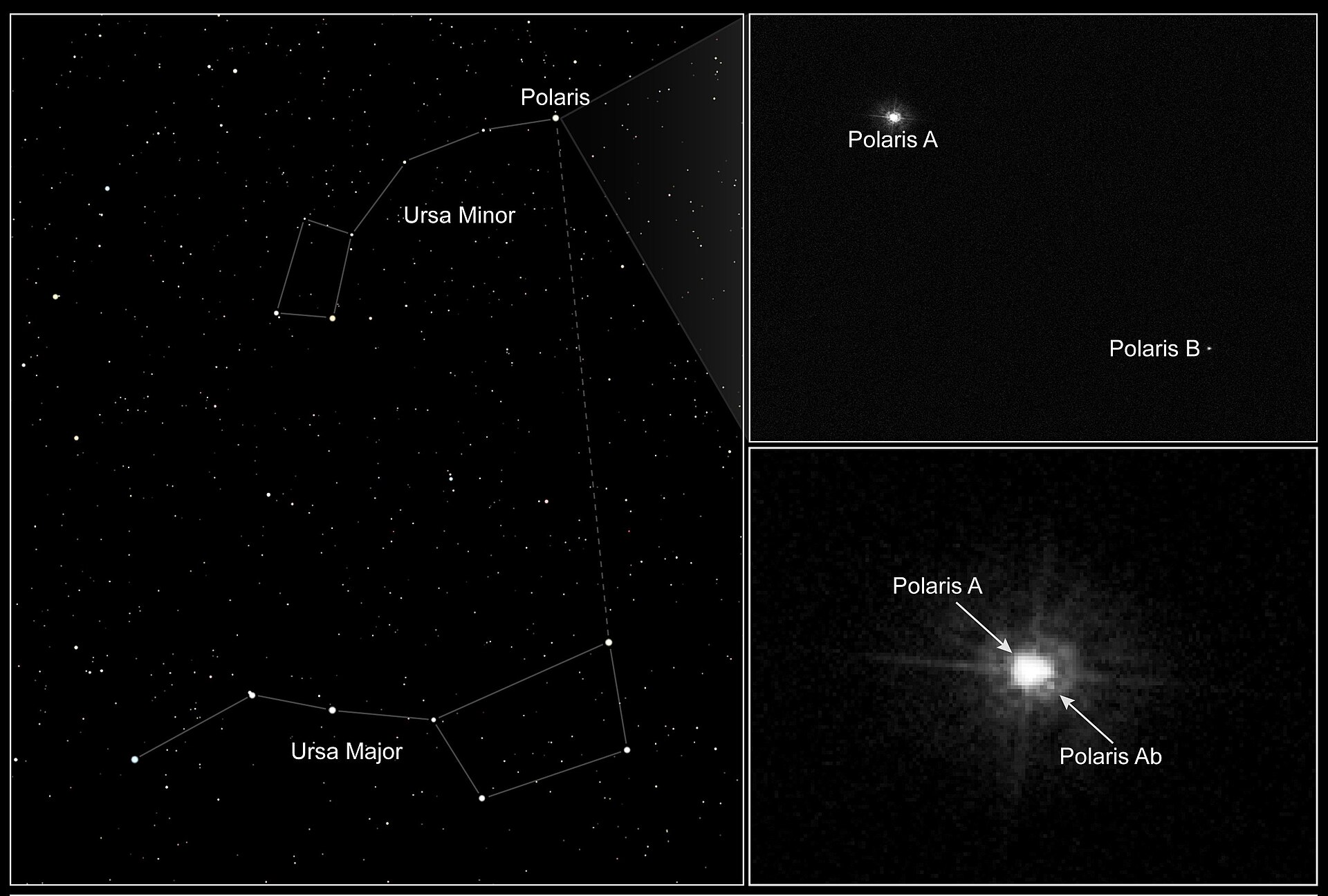
Ursa Minor (UMi)The Little BearBest seen Jun · Brightest star: Polaris (Alpha Ursae Minoris)
UMi56th largestJun
Meteor showers
Ursids (~Dec 22, ~10/h): modest but reliable; occasional 50+/h outbursts.
-
Virgo (Vir)The VirginBest seen Apr–Jun · Brightest star: Spica (Alpha Virginis)
Vir2nd largestApr–Jun
Meteor showers
Virginids (Jan–Apr): diffuse complex; Mu Virginids peak ~Apr 25 at ~7/h.
-
Vulpecula (Vul)The Little FoxBest seen Aug–Sep · Brightest star: Alpha Vulpeculae
Vul55th largestAug–Sep
Meteor showers
No significant showers; stray Perseids and Kappa Cygnids may appear in August.